Expansive and striking, the singular lines of Scottsdale’s Sonoran Desert have inspired dreamers and doers for millennia. Prehistoric settlers fashioned adobe bricks and intricate irrigation systems that transformed the desert into farmland. More recently, renowned architects like Frank Lloyd Wright and Paolo Soleri created a bold desert vision in Scottsdale that remains relevant today. The latest wave of architectural achievement reflects strong environmental values, cutting-edge design and a unique desert setting recognized around the world.
DESERT VISIONARIES
FRANK LLOYD WRIGHT
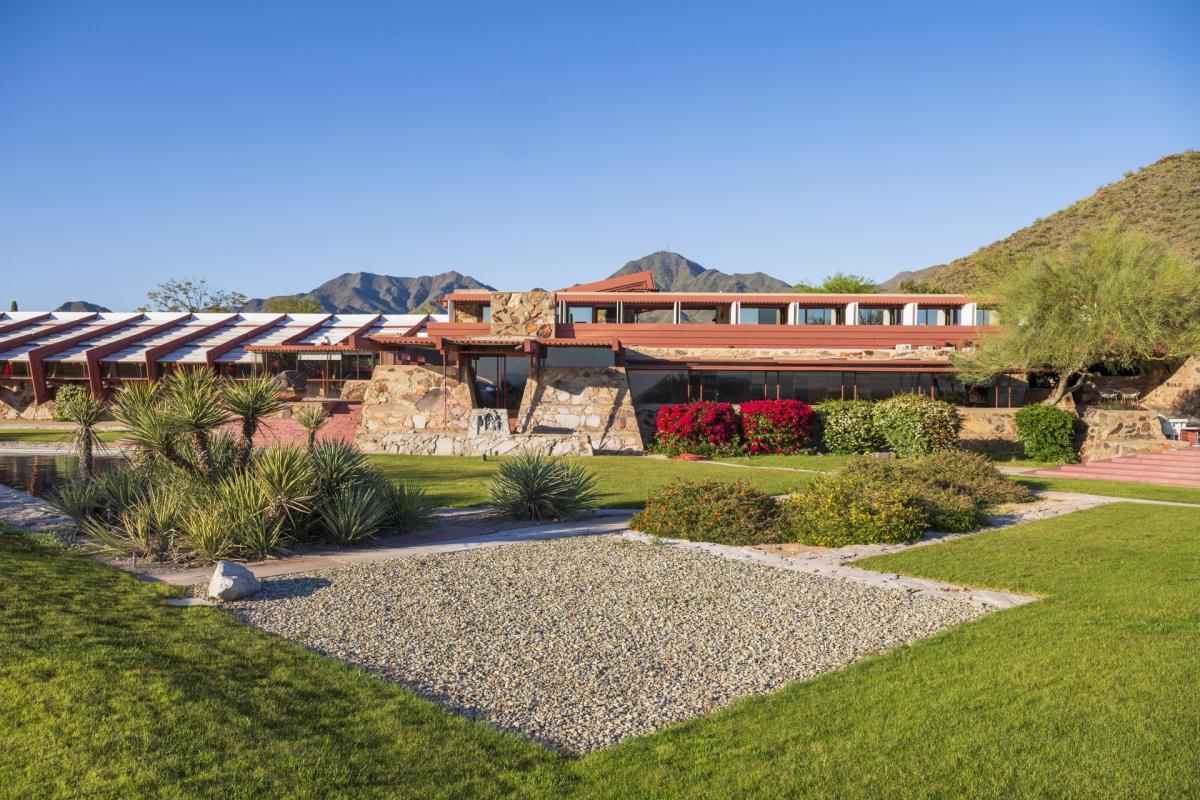
Internationally renowned architect Frank Lloyd Wright came to Scottsdale in 1937 and began building his winter camp, Taliesin West, that year. Wright created a new form of architecture, referred to as Organic Architecture, sourcing materials like sand from the desert floor and local rock. With the help of his apprentices, he built Taliesin West to serve as a living laboratory of ideas that was always in a state of evolution. Today, travelers from all over the world come to Taliesin West, a UNESCO World Heritage Site and National Historic Landmark, to behold the genius of Frank Lloyd Wright, often referred to as the “father of American architecture.”
Over the years, the Frank Lloyd Wright Foundation has made many renovations to Taliesin West and added new tours to give visitors the opportunity to experience Wright’s winter home as he would have many years ago, and peek into what inspired the genius architect’s creativity.
- Visit the mastermind’s private quarters and living room, the drafting studio, Music Pavilion, Garden Room and more on the 60-minute Self-Guided Audio Tour, Taliesin West’s signature offering. Keep in mind, guests must download an app on their phone and bring headphones for this tour, which discusses the genius of Wright and his deep love of the Sonoran Desert.
- Occurring seasonally, the Behind-The-Scenes Tour provides an in-depth look at not only Wright’s professional life, but his personal life amongst apprentices and friends. During this tour, guests will go beyond the ropes into the Guest Deck, the Apprentice Court and the Kitchen, and learn more about the foundation’s extensive collections and historic preservation work.
- Take the Desert Shelter Tour November through April to see the desert dwellings designed and built by former Frank Lloyd Wright students. During the 90-minute tour, guests discover how these experimental shelters embody the spirit of hands-on learning and the powerful dialogue between architecture and the natural world.
Wright’s vision and influence are seen throughout Scottsdale, and one of his most noted designs is the spire at the Scottsdale Promenade shopping center. Originally designed for the Arizona State Capitol building, the steel-framed structure is 20 feet wide at the base and 125 feet tall, painted in a copper tone and illuminated internally at night.
THE SCHOOL OF ARCHITECTURE
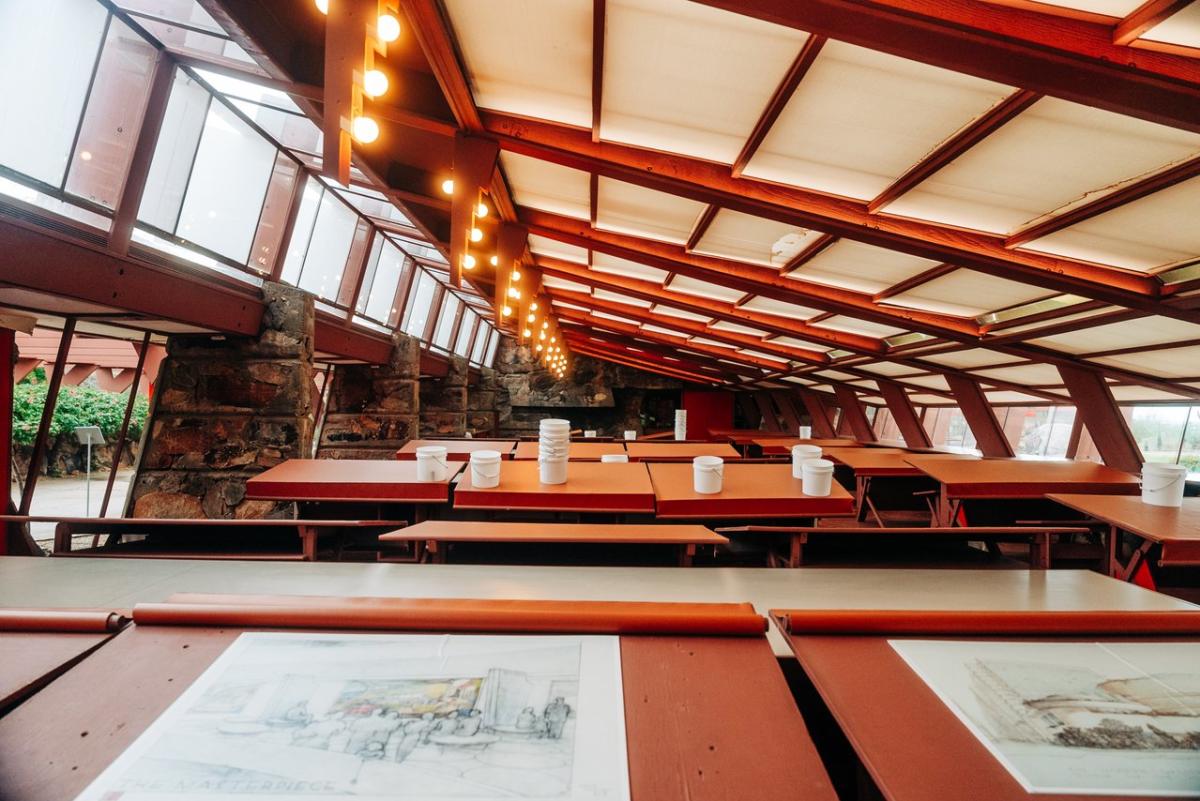
Founded by Frank Lloyd Wright in 1932, The School of Architecture celebrates nearly 100 years of continuous operation at its new home: Scottsdale’s historic Cattle Track Arts Compound. This hidden, 13-acre desert oasis has been a haven for working artists, builders, and innovators since the 1930s, originally established by engineer George Ellis, who famously collaborated with Wright on early desert construction techniques. Today, The School of Architecture’s accredited Master of Architecture program thrives within this vibrant community, continuing Wright's philosophy of "learning by doing." Through the school’s signature Shelter Thesis Program, graduate students completely design, build, and inhabit climate-responsive structures directly on the land. This unique partnership between The School of Architecture and Cattle Track offers students a living, collaborative laboratory rooted deeply in Arizona's rich architectural heritage.
PAOLO SOLERI
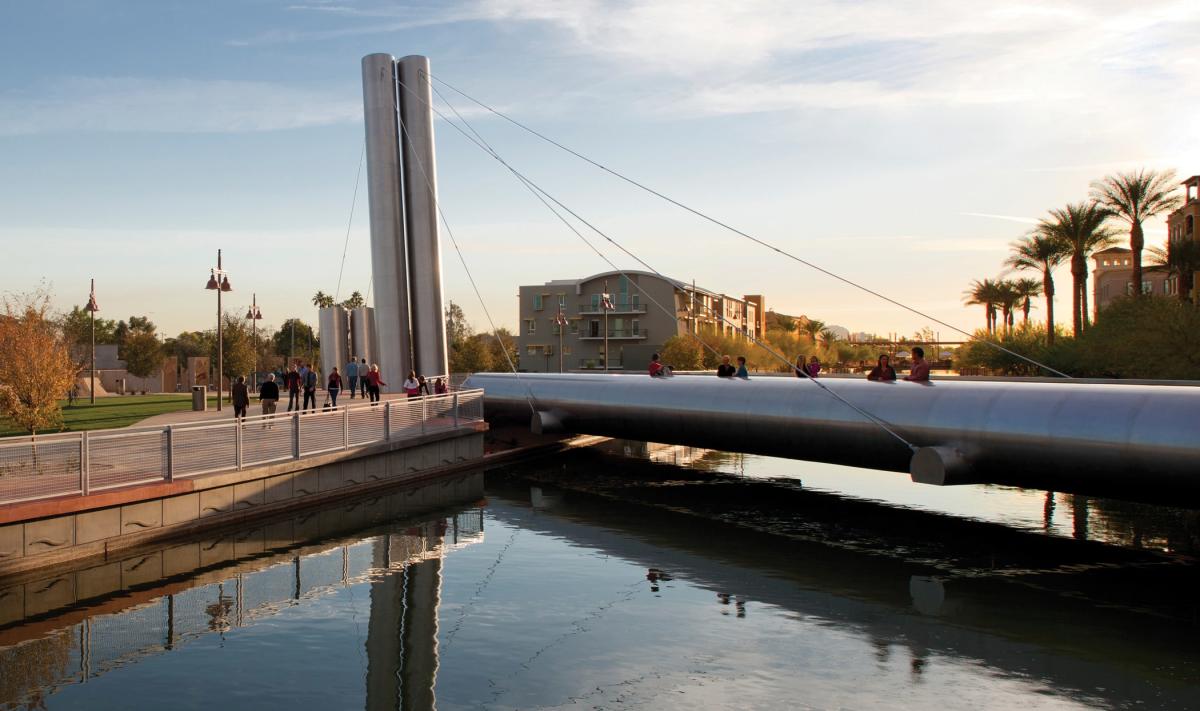
The late Italian-born designer Paolo Soleri came to the U.S. in 1947 and spent nearly two years in fellowship with Wright at Taliesin West and Taliesin in Wisconsin. During this time, Soleri gained international recognition for a bridge design displayed at New York City’s Museum of Modern Art.
In December 2010, Scottsdale became home to the first and only Soleri-designed bridge. The bridge, framed by a 22,000-square-foot plaza that serves as a gathering place for special events and performing arts, demonstrates the importance of solar movement. It is the second pedestrian bridge connecting the Scottsdale Waterfront to the north and south banks of the Arizona Canal and a Scottsdale Public Art permanent work.
Soleri demonstrated a lifelong commitment to research and experimentation in urban planning. He is best known for Arcosanti, the prototype “arcology” community, founded in the high desert in 1970, approximately 70 miles north of Phoenix. Arcology – architecture in harmony with ecology – posits that cities should be designed to maximize the accessibility associated with an urban environment while minimizing the use of energy, raw materials and land, reducing waste and pollution and allowing interaction with the surrounding natural environment.
Soleri made the Scottsdale area his home in 1956 and built his studio and residence on a site now known as Cosanti – designated an Arizona historic site – in Paradise Valley.
- The word Cosanti is the combination of Italian words, “cosa” (things) and “anti” (against), thus describing the minimalistic and sustainable vision for Soleri’s arcological communities.
- It is the headquarters of the Cosanti Foundation, a nonprofit educational organization Soleri established dedicated to architectural research. It is also the foundry, studio and gallery for Paolo Soleri Bronze & Ceramic Windbells & Sculptures. On weekday mornings, visitors can catch a live demonstration of the bronze bells being poured.
WRIGHT-INSPIRED DESIGN

- Famed “green” architect, planner and author, Vernon Swaback was Wright’s youngest apprentice at Taliesin West, studying and working there for more than 20 years. His prestigious firm, Swaback Partners, designed the sumptuous yet sustainable Spa Avania at Grand Hyatt Scottsdale, which incorporates contemporary architecture, a sun-inspired color palette and natural light throughout the resort and its eco-pond.
- Formerly the Paradise Valley Racket Club, Sanctuary Camelback Mountain is a posh retreat with clean lines and a minimalist approach, originally designed by Wright protégé Hiram Hudson Benedict in the 1950s. The floor-to-ceiling glass in the signature restaurant showcases views of Camelback Mountain, where the resort is perched.
- Sanctuary’s developers were also the masterminds behind one of the nation’s best-preserved examples of midcentury modern architecture, the historic Hotel Valley Ho, designed by Wright contemporary Edward L. Varney. Originally built in 1956 featuring bold geometric shapes and cantilevered breezeways, the hotel reflects Scottsdale’s true cosmopolitan nature, with much of the original property featuring minimalist Wright-inspired design elements.
- Blocks away, Postino Wine Café (Highland) took over what used to be the Valley National Bank, designed by architect Frank Henry, the late Studio Master Emeritus of the Frank Lloyd Wright School of Architecture, in the 1960s.
MODERN MARVELS
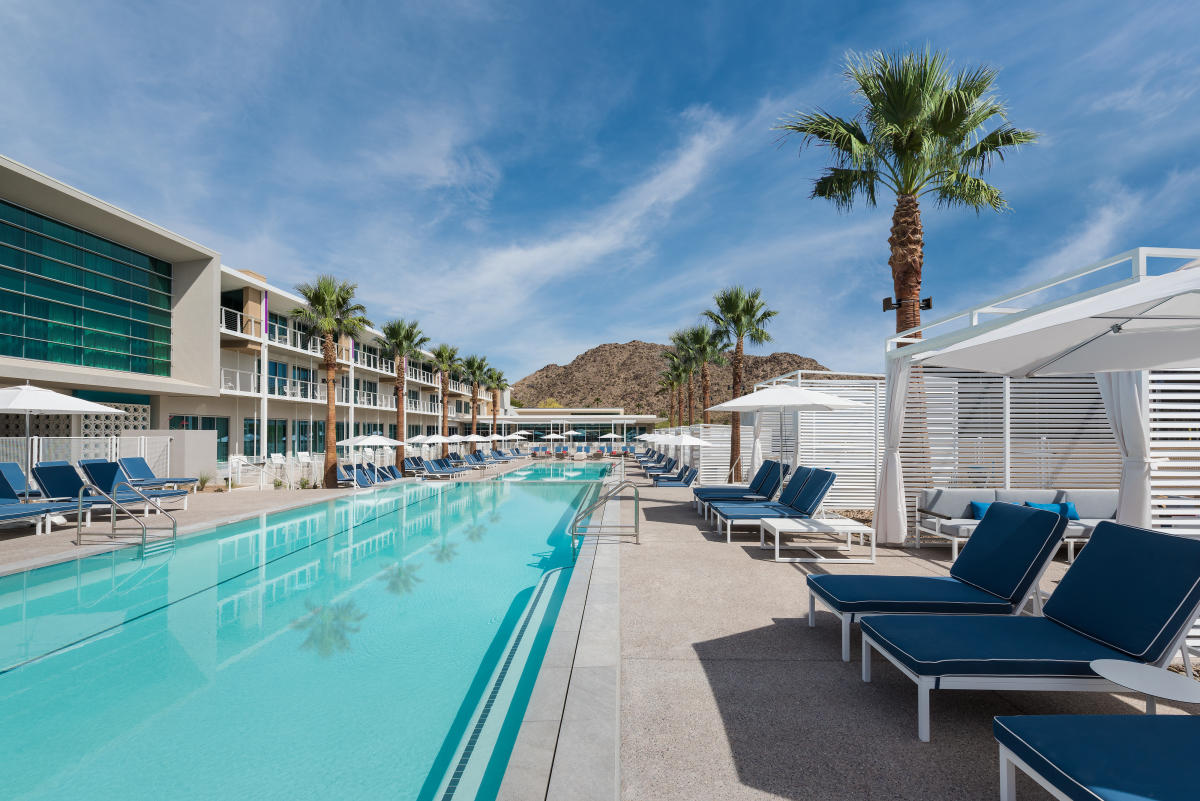
- Mountain Shadows originally opened in 1959, earning its namesake from the shadows cast by the silhouettes of Camelback Mountain and Mummy Mountain, and catering to Hollywood stars. Traces of its past can be found in the resort today, which features desert modern architecture and sleek design features to show off its stunning views.
- Across 23 acres of sweeping desert landscape, Andaz Scottsdale Resort & Bungalows’ midcentury modern, bright-colored interiors draw inspiration from Alexander Girard and other renowned artists and designers of the late 1950s and early 1960s. The resort’s bungalow-style rooms and suites are situated in clusters, reminiscent of an artists’ colony.
- While hard to believe, the sleek Scottsdale Museum of Contemporary Art was formerly a movie theater. Arizona modernist Will Bruder, who worked and studied under Paolo Soleri, transformed the space, which offers five rotating art galleries and a permanent James Turrell Skyspace, where visitors experience the hues of the desert sky.
- At Western Spirit: Scottsdale’s Museum of the West, the two-story, 55,000-square-foot museum’s skin mimics that of saguaro cactus ribs, pairing well with the low-water-use desert plants flanking the campus. Both indoor and outdoor spaces meet the Leadership in Energy and Environmental Design Gold Standard for sustainability.
- The 190,000-square-foot Musical Instrument Museum houses some of the world’s rarest instruments, but the space that displays them is equally impressive. MIM features distinctive, abstract architecture that evokes Southwestern topography while suggesting the museum’s international scope and expressing music’s universal role across all cultures.
TAKE A TOUR
For an insider's look at some of the best midcentury modern architecture in Scottsdale and beyond, expert Ace Bailey of Ultimate Art & Cultural Tours showcases incredible buildings by Frank Lloyd Wright and other notable local architects. Kick off the day with a Magical History Tour of the midcentury modern icon, Hotel Valley Ho, followed by a tour of the Garden Apartment District, for a special look inside a midcentury modern townhome. Then, savor lunch at Postino Wine Café (Highland), housed in a stunning midcentury building before embarking on an extensive walking tour of the Price House in Paradise Valley, the largest house that Frank Lloyd Wright built in Arizona – all while getting a driving tour of several notable midcentury gems.
Discover more ways to experience design and architecture in Scottsdale.