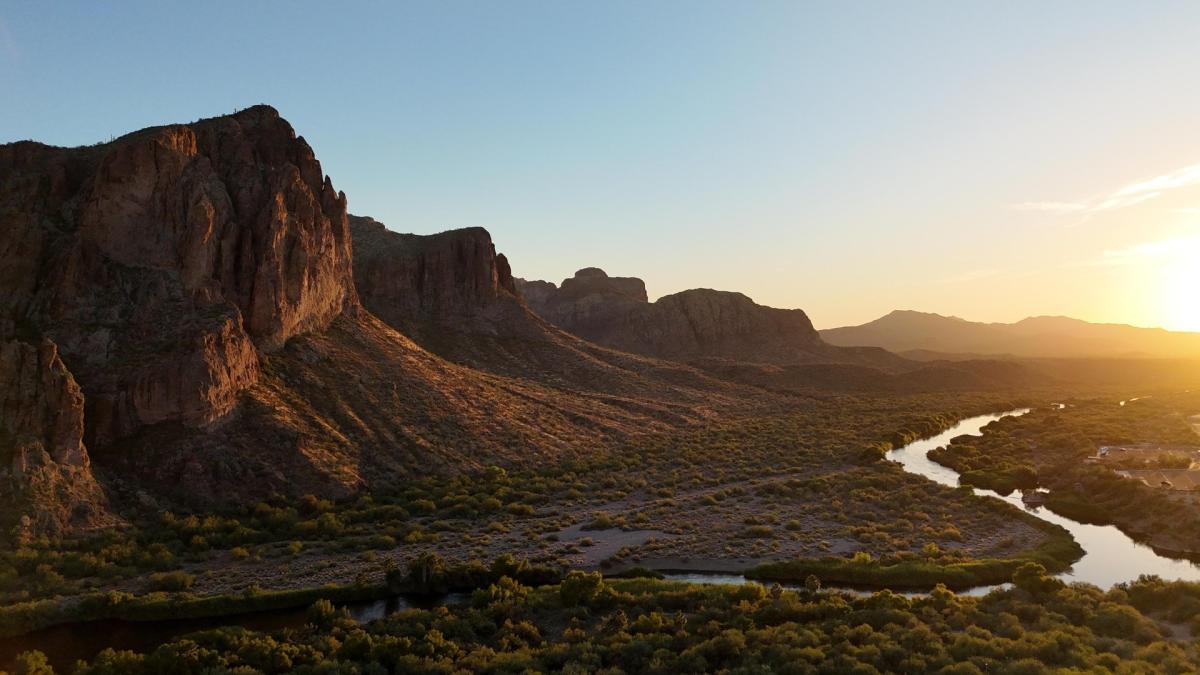
Scottsdale may be known for its luxury resorts, acclaimed restaurants and vibrant arts scene, but its natural beauty is every bit as captivating. Set amid the Sonoran Desert — the wettest desert in the world and the most biologically diverse desert in North America — the city gives you access to rugged mountains, sweeping vistas and mesmerizing sunsets. This unique landscape is also the only place where iconic saguaro cactuses grow in the wild.
There’s no shortage of ways to explore. Hike among the saguaros, float above the desert in a hot-air balloon, saddle up for a trail ride or set out on an exhilarating off-road tour. Nearby rivers and lakes add even more possibilities, from kayaking to rafting and paddleboarding.
Nearly one-third of Scottsdale’s land is permanently protected as open space, meaning there’s plenty of desert scenery to enjoy, all within 20 minutes of the city’s center.
FAST FACTS
- Elevation rises nearly 3,800 feet from south to north
- About 15,000 acres of developed recreational areas and undeveloped land
- 41 parks in the city, totaling 982 acres
- Indian Bend Wash Greenbelt crosses 11 miles with more than 24 crossings, connecting an oasis of parks, paths, lakes and golf courses in the heart of Scottsdale
- 232 miles of nonmotorized trails
- 129 miles of paved pathways
THE LAY OF THE LAND
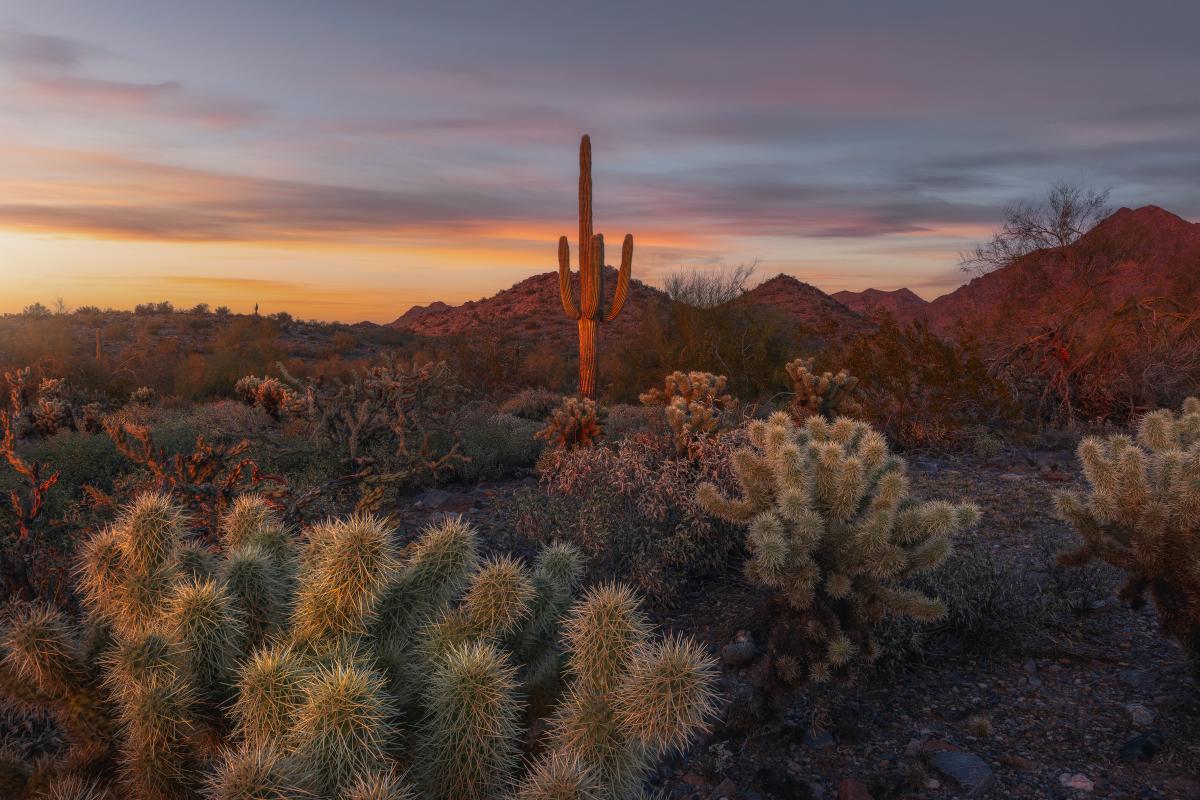
MCDOWELL SONORAN PRESERVE
The 30,500-acre McDowell Sonoran Preserve is a sustainable desert habitat, home to a thousand different types of plants and animals, covered by soaring mountains, boulder-crowned mesas and iconic saguaro cacti.
When development began to gnaw at the flanks of the McDowell Mountains in North Scottsdale, a group of passionate volunteers swooped into action. Not content to simply establish a few isolated parks, they rescued virtually the entire desert. Established in 1995 with just 200 acres, the Preserve has grown through the sustained efforts of the community and the McDowell Sonoran Conservancy and is now 36 times the size of Central Park.
Today, the McDowell Sonoran Conservancy continues to help fuel conservation through science, education and stewardship. In addition to research, it helps promote a deeper understanding of the desert through free public programs, including guided hikes and lectures.
- Largest urban preserve in North America and the fourth largest in the world
- More than 230 miles of shared-use trails, departing from 11 trailheads
- More than 750,000 people visit each year
- 650 volunteers and nine full-time staff maintain the Preserve
- Connects with the 21,099-acre McDowell Mountain Regional Park that has more than 40 miles of multi-use trails and 92 campsites
PINNACLE PEAK PARK
Toward the northernmost end of Scottsdale, more preserved open space surrounds notable landmarks, such as the distinctive needlelike point of Pinnacle Peak. Pinnacle Peak Park was created to protect the stony summit and a wide, smooth path winds through the surrounding boulder fields. The city park features a moderate, four-mile out-and-back trail, where there’s a chance to see lizards, rattlesnakes, roadrunners, cactus wrens and a variety of desert plants.
The park also offers a variety of free programming throughout the year, including sunset-full moon hikes, Astronomy Evenings and wildlife discovery exhibits, as well as guided hikes and yoga.[LM1]
- Totals 150 acres
- At its highest point, the trail reaches 2,889 feet, for a cumulative elevation gain of 1,300 feet
- Three designated areas for experienced rock climbers, with a variety of routes and skill levels
TONTO NATIONAL FOREST
Surrounding Scottsdale to the north and east, touching the towns of Cave Creek, Mesa and Fountain Hills, is Tonto National Forest. Here, the landscape ranges from saguaro cacti-dotted desert to pine forested mountains below the Mogollon Rim. Tonto National Forest borders the McDowell Sonoran Preserve and envelops a portion of the Verde River and lower Salt River. Its range in altitude and variety of vegetation offer outstanding recreational opportunities, whether at a lake beach or a cool pine forest campground.
The Tonto National Forest tells the story of more than 12,000 years of human history, from Indigenous peoples, including the Apache, Hopi, O'odham, Yavapai and Zuni communities, to ranchers, miners, sheepherders and early settlers who shaped central Arizona.
- Spans nearly 3 million acres with 900 miles of trails
- Largest national forest in Arizona and ninth largest national forest in the U.S.
- Draws 3 million visitors a year
- Established in 1905 to protect the Salt Verde Rivers’ watersheds
- Contains six lakes or reservoirs: Bartlett, Horseshoe, Saguaro, Canyon, Apache and Roosevelt
- Elevation ranges from 1,300 to 7,900 feet
- Home to more than 400 vertebrate species, including 21 listed as threatened or endangered at the state or federal level
- History of producing silver, gold, copper, zinc and many other metals and minerals
HOW TO EXPERIENCE THE DESERT
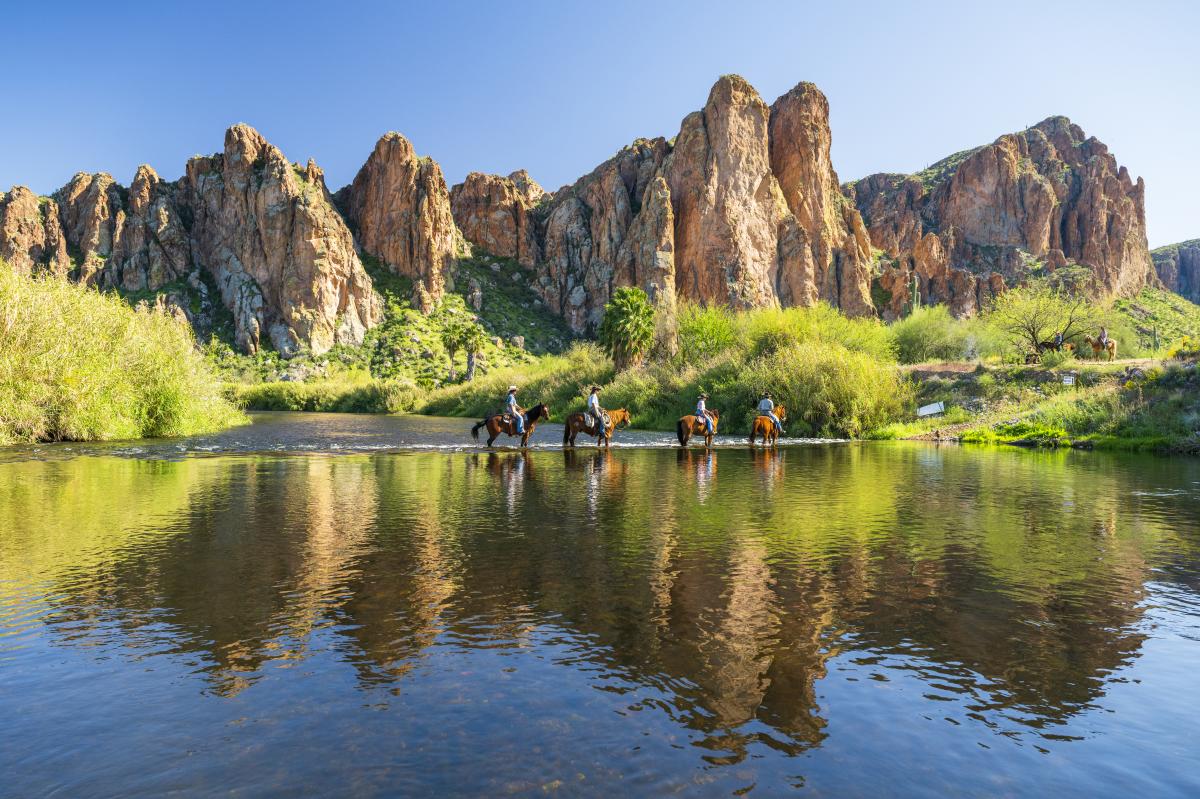
SOFT ADVENTURE
- FLOAT down the calm waters of the lower Salt River on a guided raft or kayak tour with Cliff Creek Outfitters and Riverbound Sports, or cruise the serene Saguaro Lake with Desert Belle Cruises.
- SADDLE UP for a tranquil horseback ride at MacDonald’s Ranch, Saguaro Lake Ranch Stable or Fort McDowell Adventures.
- SOAR over the Sonoran Desert with unobstructed views of its natural landscape in a hot air balloon with Hot Air Expeditions or Rainbow Ryders.
- RIDE through the natural beauty of the McDowell Sonoran Preserve and pick up desert facts along the way on a Hummer Tour with Stellar Adventures.
- WANDER cacti- and succulent-lined trails at the Desert Botanical Garden.
- GAZE up at the stars in a dark sky area of Tonto National Forest with Scottsdale Adventure Tours.
- PEDAL an e-bike along the streets of Old Town Scottsdale and Indian Bend Wash Greenbelt — a wide path winding through neighborhood parks, golf courses and ponds — with Cliff Creek Outfitters.
HIGH-OCTANE ADVENTURE
- CLIMB with the rock-climbing pros at 360 Adventures, scrambling to high perches and reveling in once-in-a-lifetime views.
- ROPE a steer, herd cattle and saddle a noble steed at the immersive Arizona Cowboy College.
- FLY over scenic mountains and lakes and take stomach-dropping turns with H5 Helicopters.
- ZOOM through rocky streambeds and across winding trails in a Ford Bronco or in a zippy ATV Sand Buggy with Desert Dog Offroad Adventures or Desert Wolf Tours.
- SUMMIT the skyline-defining Camelback Mountain, where the great humped spine of granite and sandstone rises above the center of the city of Scottsdale. Breathtaking panoramas reward the challenging ascent.
- PEDAL through rugged terrain on a mountain bike with Cliff Creek Outfitters.
For more quick facts and recommendations for ways to get out and see the desert, check out the Hiking, Biking & Trail Guide.